Does the Moon Really Impact My Cycle, My Sleep, My Mood?
Hello Dear One,
As we arrive at the last Super Full Moon of the year and edge closer to the winter solstice, I’ve been thinking about how much of our lives are quietly governed by cycles we rarely name—light and shadow, hellos and goodbyes, beginnings and endings.
Years ago, in my doctoral work, I wrote a capstone paper on the relationship between lunar rhythms, menstruation, and the endocrine system. I wanted to understand something I kept feeling in my own body and hearing from patients:
Does the moon really impact my cycle, my sleep, my mood?
This Lunar Medicine blog is my way of returning to that question with you...
The Super Full Moon in Gemini arrives as Lunar energy is at it’s Yang peak—bright, airy, and expressive—just as the season itself leans deeper into Yin and the long dark of winter. It’s a moment where outer brightness and inner descent meet: the sky expanding while the roots of the body draw down and in.
In this blog, I’ll share how Classical Chinese Medicine understands the Full Moon.
As we move toward solstice, my wish is that this helps you feel less alone in your own cycles—lunar, hormonal, emotional, ancestral.
Thank you for reading, and for letting this rhythm find you.
On your side,
DJV
Super Full Moon in Gemini — Yang at the Edge of Winter
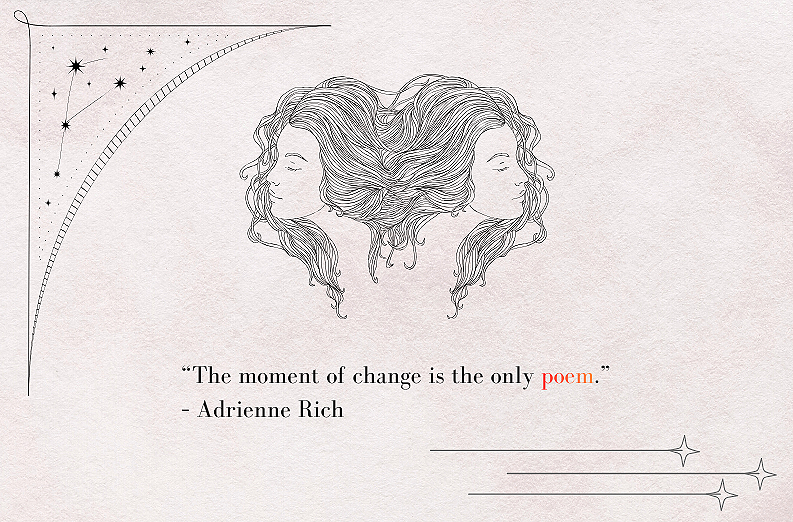
A supermoon happens when the Full Moon draws a little closer to the Earth than usual. It looks slightly larger, brighter, almost overlit. The oceans feel that nearness. Sensitive bodies often do too.
In classical Chinese medicine, the Full Moon is Yang at its peak. Qi and Blood rise toward the surface, fluids move outward, and the Shen (spirit) sits closer to the skin. Feelings that were manageable may become undeniable. Dreams grow louder. The body becomes a little more transparent to itself.
This one arrives in Gemini, an Air sign linked to lungs, breath, voice, nerves, and the space that exists between two truths. In Chinese Med language, you can imagine Qi moving into the upper burner—chest, throat, and mind—stirring conversations, ideas, and long-held questions.
All of this is happening as we move toward the winter solstice, when Yin reaches its deepest point and the season asks the body to descend, root, and store. So we are standing in a paradox:
a sky that is full, bright, talkative
a season that is dark, quiet, and pulling us inward
Neither is wrong. The Super Full Moon in Gemini simply illuminates where we are split between what wants to be spoken and what wants to rest.
It may highlight:
thoughts that have been circling without a landing place
a conversation you know belongs to this year, not the next
two paths, identities, or desires you’ve been trying to hold at once
changes in breath, voice, or sleep as your system processes more than you realize
The moon doesn’t create these tensions; it casts light on the pattern that is already there.
As the outer light swells and the days grow shorter, you might ask:
What is reaching for expression before the year closes?
What is asking to be laid down gently at the altar into the void to root and re-form?
7-Year & 8-Year Cycles in Classical Chinese Medicine
Have you ever looked back and realized the last 7–8 years of your life felt like a distinct chapter? A new phase of energy, health, relationships, or creativity? In Classical Chinese Medicine, the Huang Di Nei Jing (Yellow Emperor’s Classic) says that:
What it calls “women’s” bodies move in 7-year cycles
What it calls “men’s” bodies move in 8-year cycles
The text was written in a very binary world, but it’s really talking about patterns of Jing (essence) and how bodies unfold over time.
Traditionally, the 7-year cycle is linked with bodies whose primary hormonal story is blood, Yin, and cyclical fertility (what we’d now describe as many AFAB / estrogen-dominant bodies) first bleed, peak fertility, perimenopause, menopause, and a “second spring” after.
The 8-year cycle is used for bodies described as more Yang and gradually unfolding (often AMAB/ testosterone-dominant bodies)—with different timing for growth, sexual maturation, and decline.
Today, we know that gender, hormones, and lived experience are far more diverse than the original language allows. So I hold this teaching as a pattern, not a rule—a poetic way of saying:
our bodies tend to move in chapters, in waves of 7s and 8s and beyond, and those chapters don’t always line up neatly with the categories we were given. However you identify, you’re invited to notice:
What “chapter” does your body feel like it’s in right now—and what is it asking for?
Stay tuned — next up, I’ll explore:
The concept of Lunaception (the idea of living in time with the moon)
Turning toward melatonin as both a hormone of timing and cycles and an ally for a nervous system flooded with artificial light and stimulation.
