
When Our Childhood Meets Another War: The Shadows and Light of Adaptation
First in a new series
by Dr. Julie Von
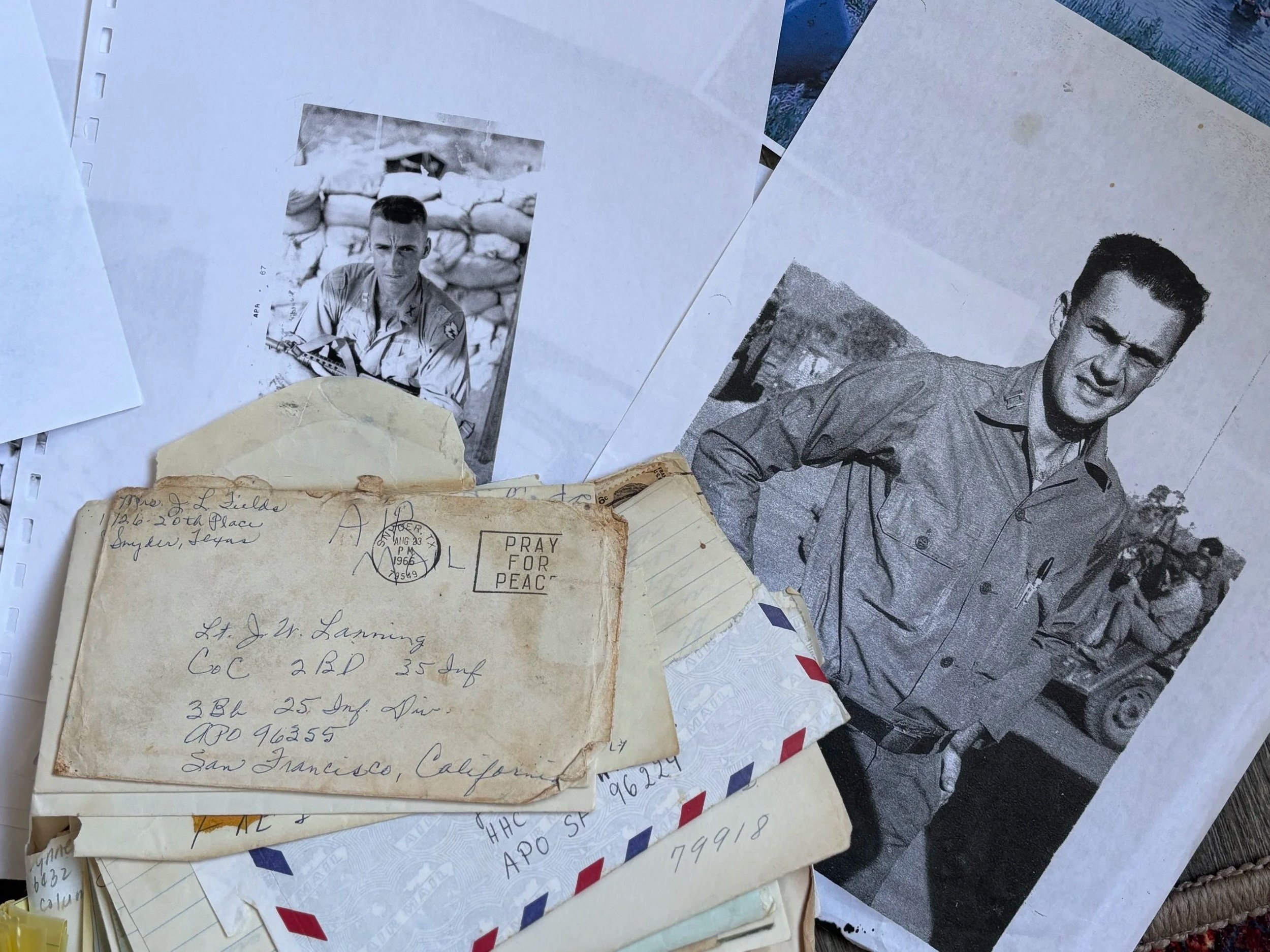
Last autumn, my father—decorated combat veteran, preacher, and quiet survivor of PTSD—passed away.
As I sifted through his journals, photographs, and the objects he carried home from the Vietnam War, I began to feel something I had spent a lifetime trying not to feel: the impact of living inside a household shaped by untreated trauma. Not just his trauma—but the kind that seeps through walls, breath, and silence. The kind children learn to read long before they can read words.
For so long, I believed I had outrun the shadows of my childhood. I became a clinician, a healer, a mother. I built a life devoted to tending wounds I could see and trace. But this last year—while grieving him—I began to see the patterns of adaptation that shaped me. Not as a failure. Not as pathology. But as deeply human strategies that help us survive the lives we are given.
And here’s what I’ve learned—what I now understand from both the lens of somatic medicine and the ache of a daughter:
Trauma doesn’t only wound. It rearranges. It adapts us.
Sometimes quietly. Sometimes brilliantly.
Children of untreated trauma become remarkable listeners. Scanners of energy. Readers of atmosphere. We become the ones who notice everything—the shift in tone, the unsaid sentence, the subtle tremor in someone’s hands. These adaptations can become symptoms, yes. But they can also become gifts.
This is the paradox I want to explore in this new blog series—what I call the shadow and the light of adaptation. The parts of us forged by trauma are not only burdens; they are also forms of intelligence. Sensitivity is not weakness, it is data. Hyper-awareness is not always anxiety—it can be devotion. The silence we learned to hold is sometimes just a story waiting to be spoken.
Losing my father showed me that healing is not about choosing sides. It is about making space for both the wound and the wisdom. It is about learning to say:
Yes, trauma shaped me.
And yes, I have the power to shape what comes next.
In the months after his death, I sat with his words and my own body. I listened to the places that had always braced quietly. I found the small girl I used to be—the one who drew pictures of helping others before she could spell “doctor.” And I began to see something I had never fully known:
As much as trauma once shaped my biology, my calling was shaped there too—in those unspoken rooms, in the subtle places between fear and love.
This blog series is my offering—to anyone who has lived with a silent history, to daughters and sons who feel the echoes of wars they never fought, and to those who suspect that their survival strategies may also be sources of strength.
Because adaptation is never only the shadow.
It is also the light.
More soon.
With tenderness and truth,
Dr. Julie Von
